Close
Type at least 1 character to search
Back to top

Caro

Facial interactions and interfaces for Caro, an emotion filled home robot

Caro is a companion robot that communicates through expressive facial cues and human-like, natural movement. Users interact through eye contact, touch, and natural conversation.

Timeline

1Q 2017 ~2Q 2017

Status

Shipped

Skills

Product design
Interactive prototyping
User research & testing
Stakeholder management

My role

Design Lead

I was a lead designer, and my mission was to build a UX concept of the robot’s face that went with the body’s appearance, collaborating with researchers and engineers. I designed new facial expressions and interactions visually to express emotions and situations well and to represent the facial identity of LG’s Robot compared to the previous design.

Team

PM, Engineering, Design (1 Senior Designer) 

Introduction

“What is Caro?”

Home Assistant Robot


Caro is an LG CLOi home robot designed to provide friendly, everyday assistance through approachable interactions and expressive communication. As a home companion, it delivers information and supports IoT services, while differentiating from competitors through emotionally rich interactions using facial expressions and body movement to build connection and trust. In its early stage, it was planned to focus especially on supporting seniors’ emotional well-being and daily comfort.

BACKGROUND

Redesigned the face system to be scalable and emotionally expressive.


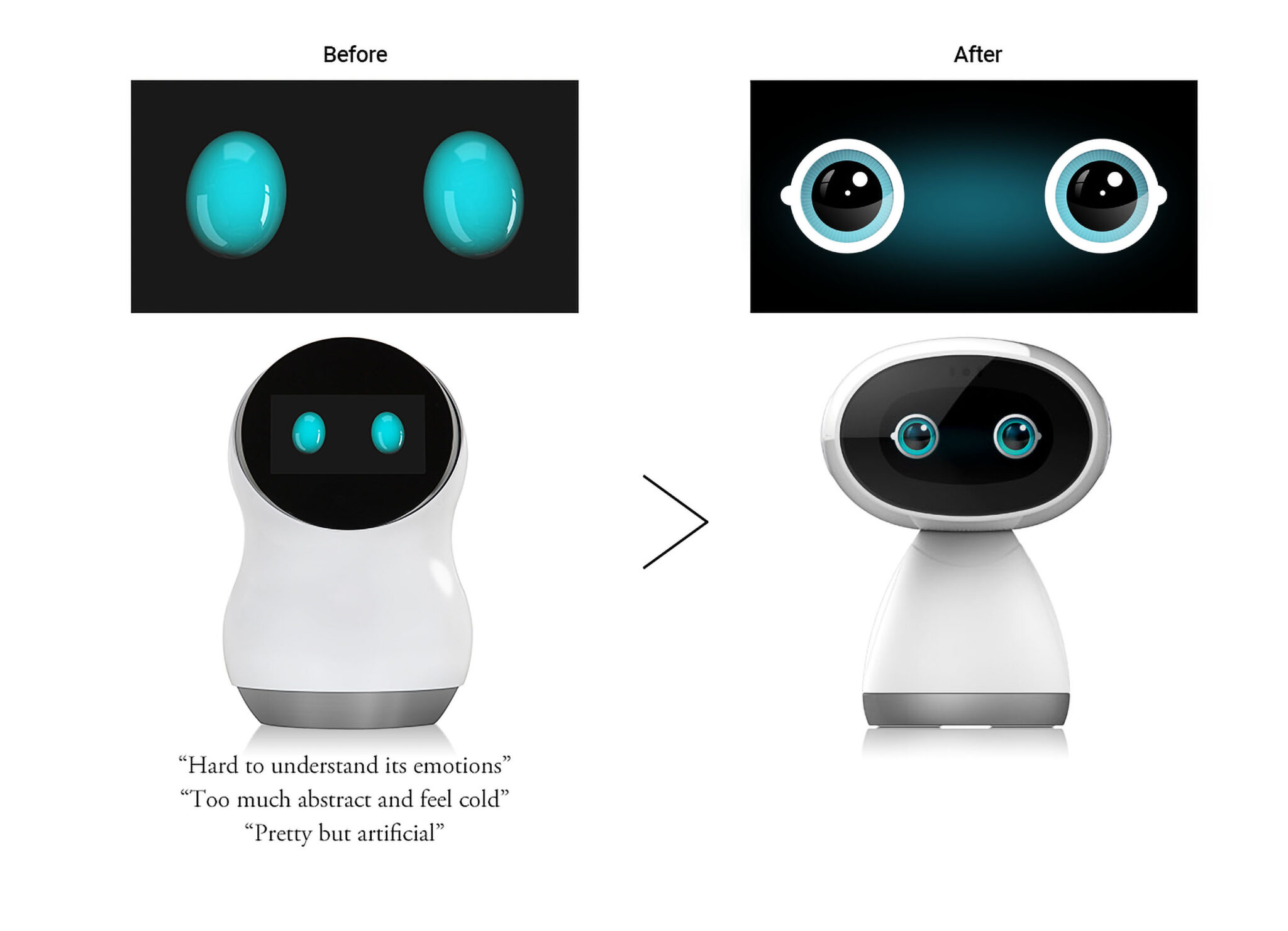
LG’s robot line is branded as CLOi, and Caro is one product within the lineup. Before Caro launched in 2017, LG introduced an earlier home robot, but its eye design didn’t support long-term brand identity. Users often described the original eyes as attractive yet too artificial and cold, making it difficult to feel emotionally connected. The eyes were also not intuitive as a communication cue, an issue especially critical for a home robot, where warmth and effortless interaction are essential.

Change to the appropriate facial design for emotional expressions and ensure consistency in the design of the LG robot’s face.

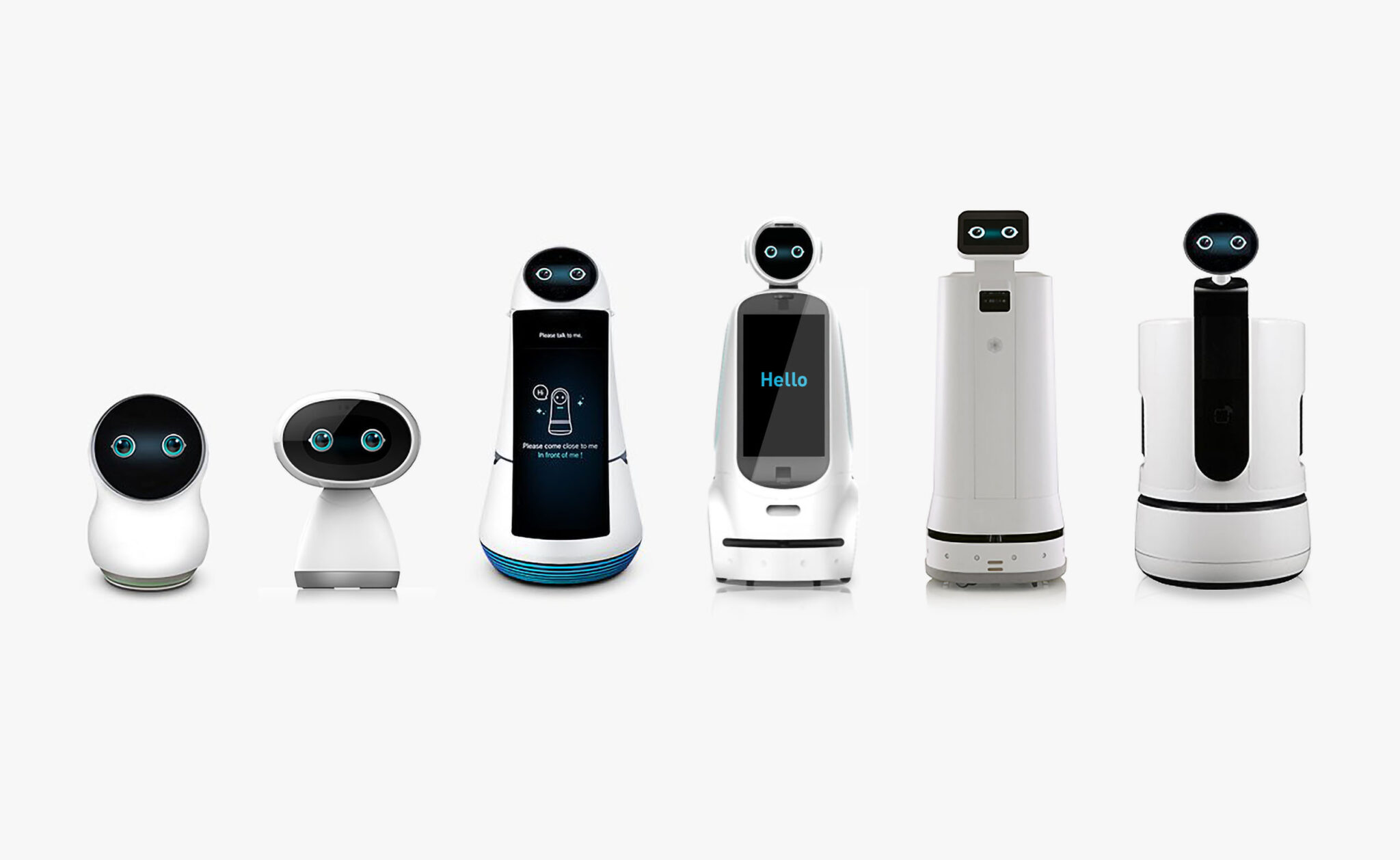
In parallel, LG needed a face system that could scale across the entire CLOi lineup to support efficient manufacturing. This required a more universal yet distinctive facial design and interaction approach that could maintain brand consistency while working across multiple robot products.

Process

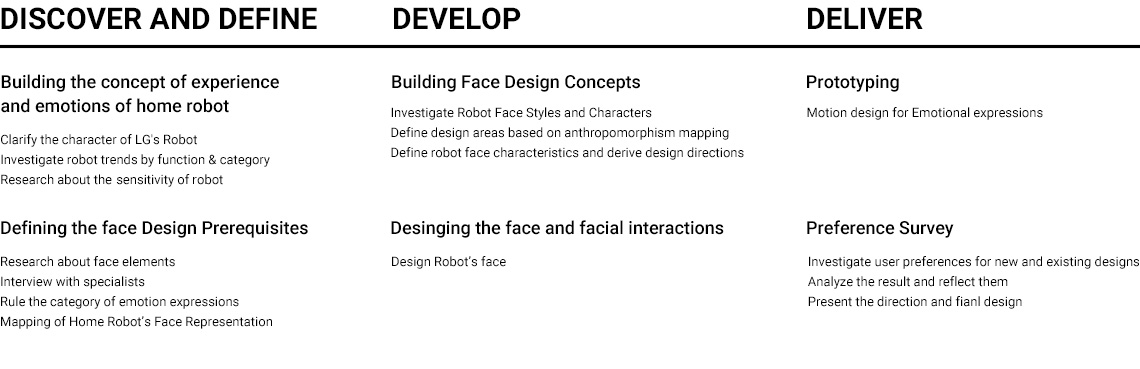
Discover-Define-Develop-Deliver


1. discover

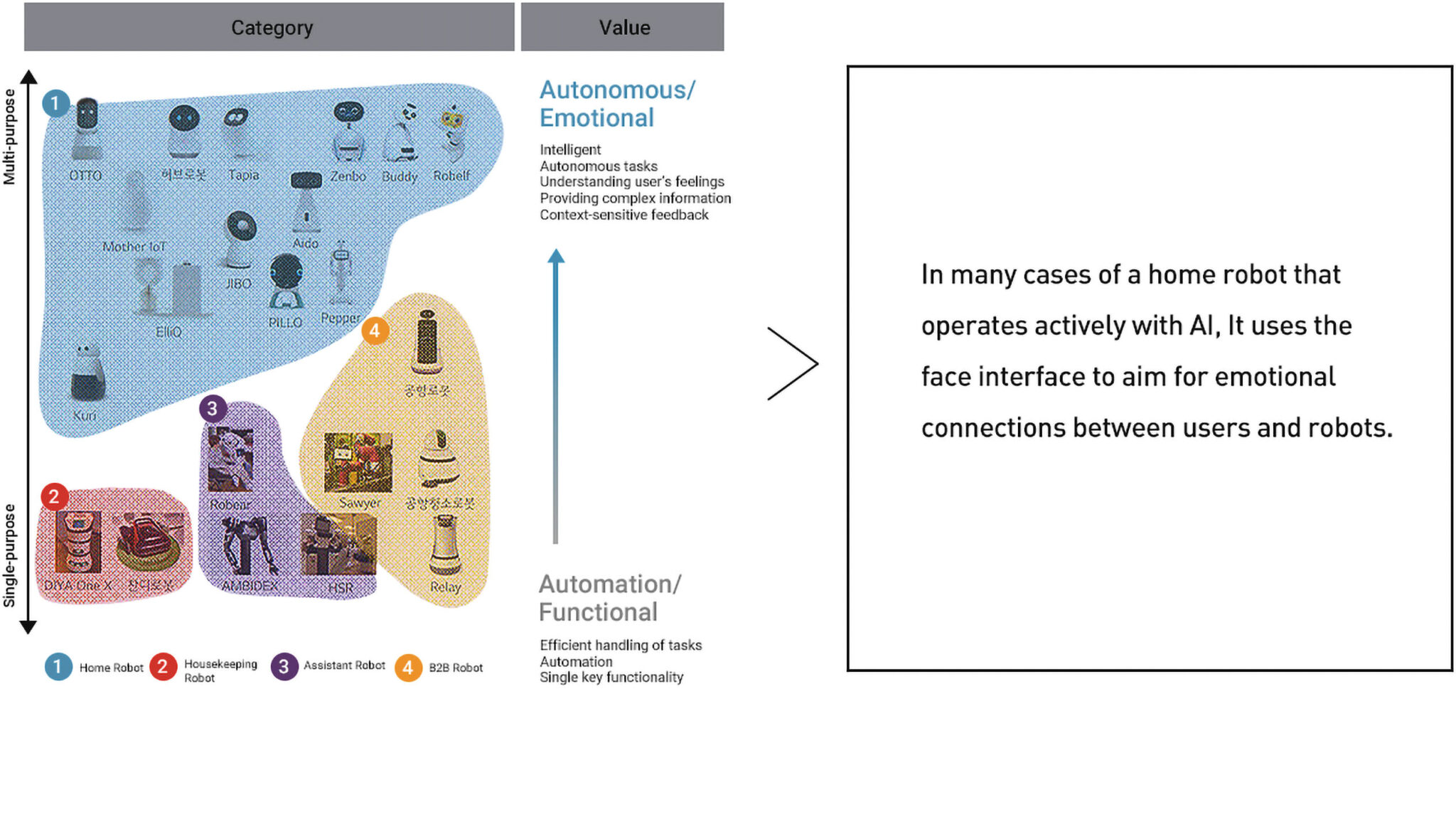
Robot’s character and the requirements of face design

research

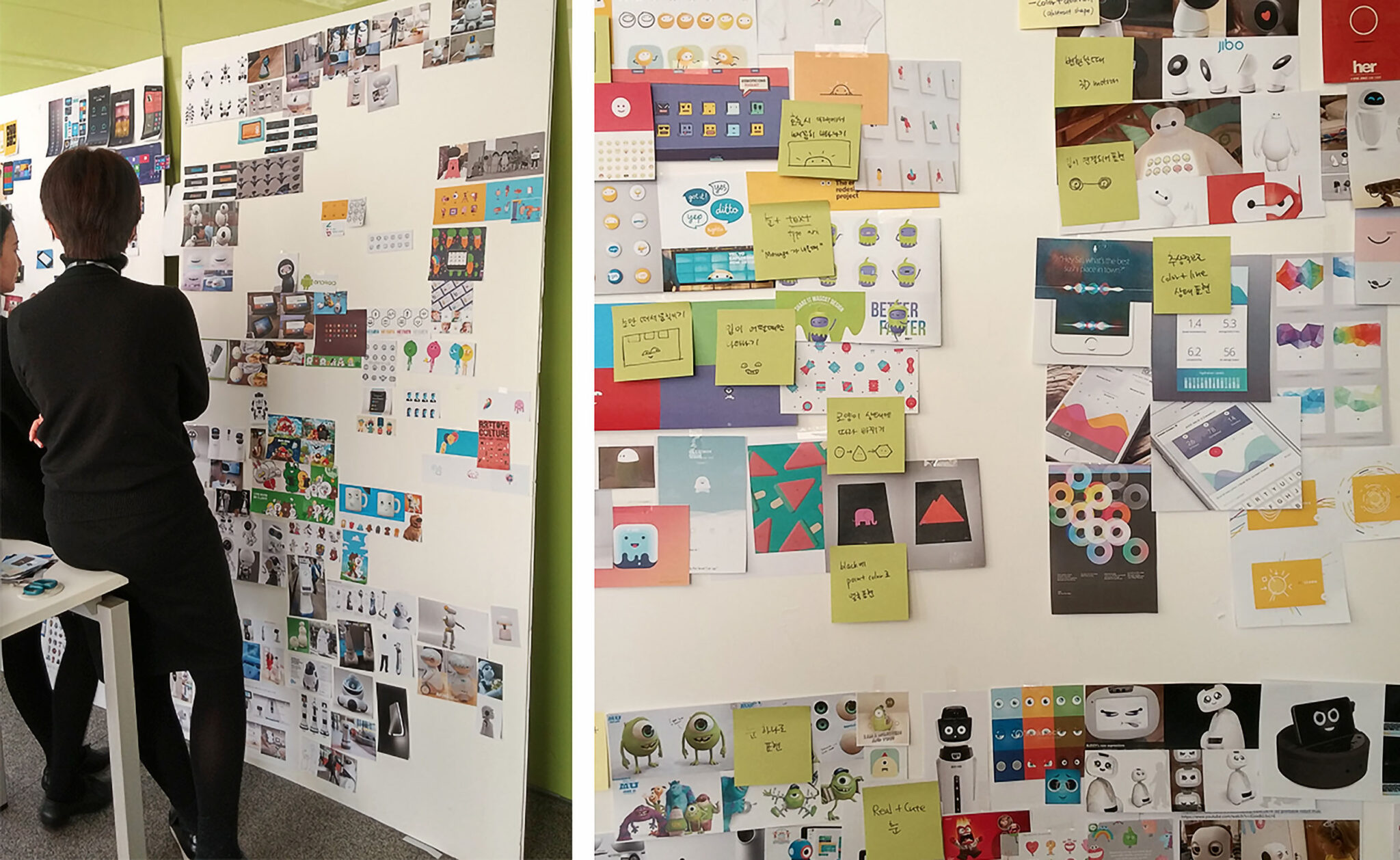
I collaborated with internal researchers and the team at Auckland University of Technology to redefine the character of LG’s robot. We created a module that defined its personality as an extroverted, agreeable, and conscientious assistant, along with guidelines for emotional responses across different situations. This character served as the foundation for all interaction and behavior design.

A kind, intelligent “secretary” who feels human: dependable, yet occasionally playful and imperfect.

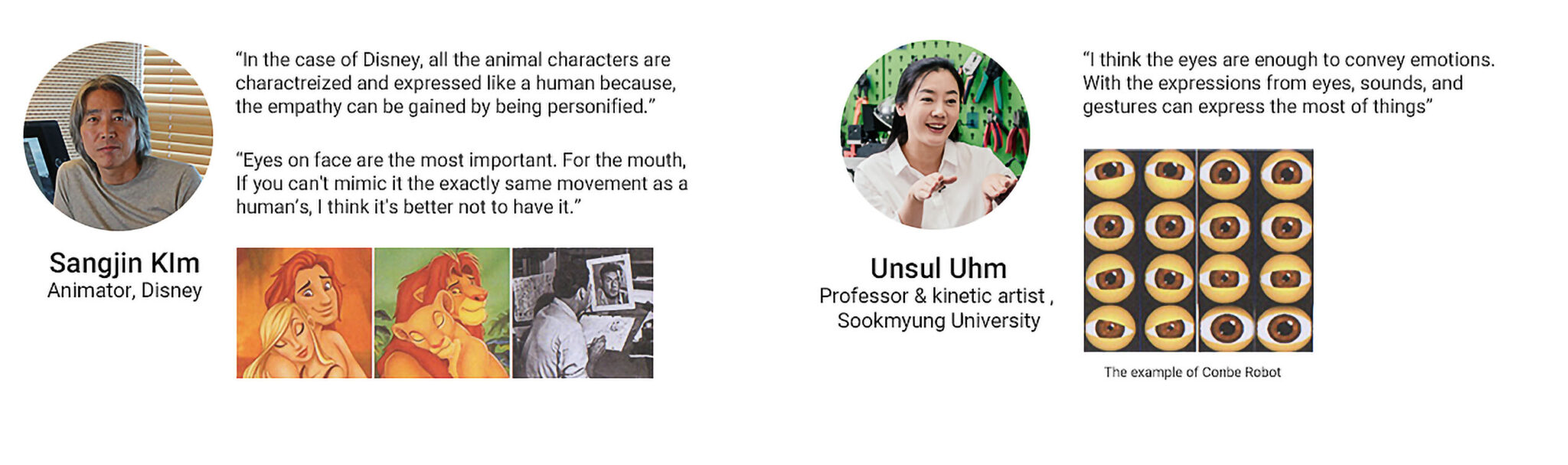
Experts interview

Additionally, though the research, a mouth was seen as a key part of conveying expression and wanted to include this to the final design. We soon discovered that adding precisely synchronized lip movements to be a very complex technical challenge. Ultimately, the mouth element was dropped in favor of concentrating on the eyes as the main means of facial communication.

Personifying emotion is highly effective and even eyes alone can convey it.

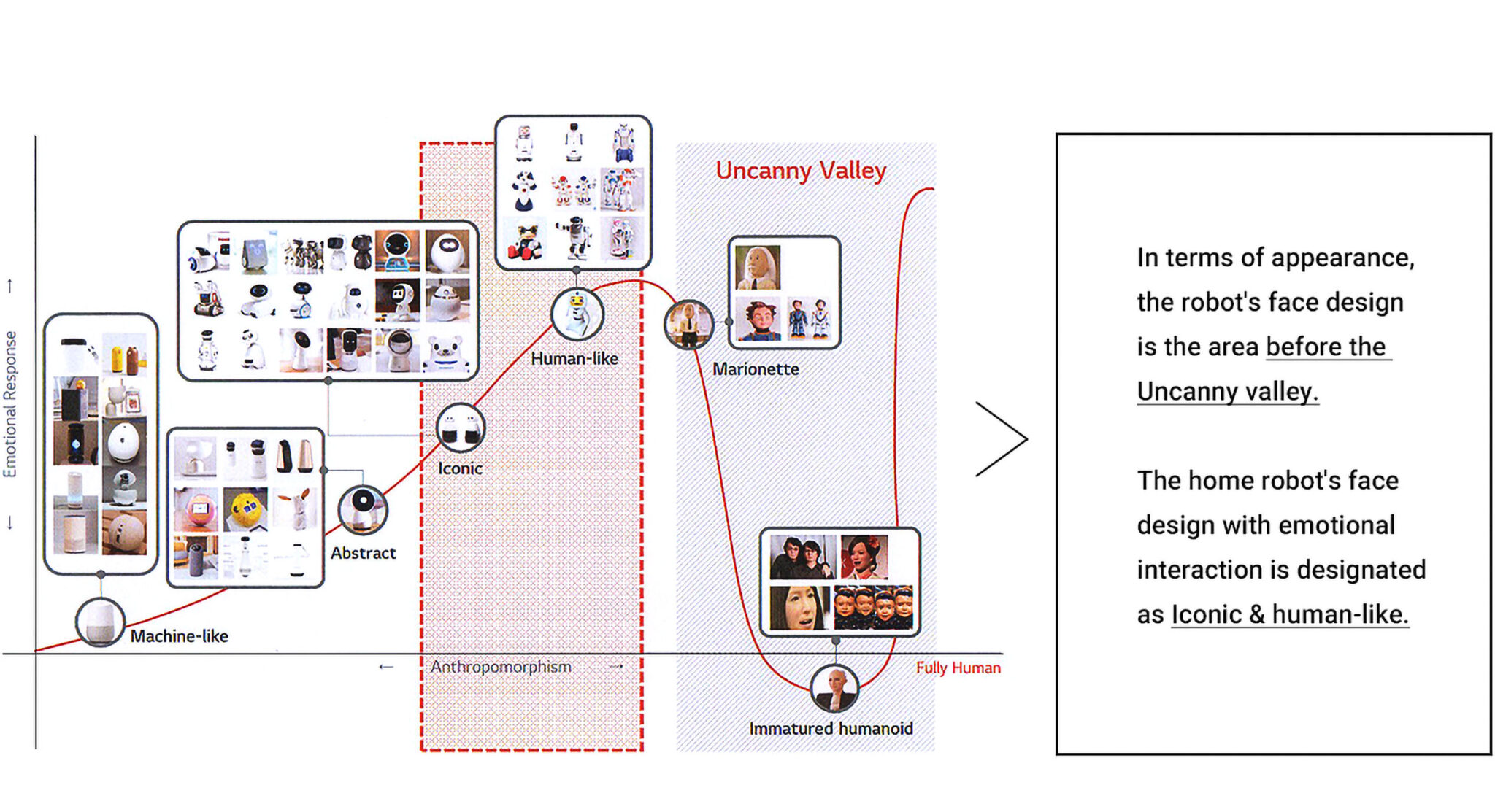
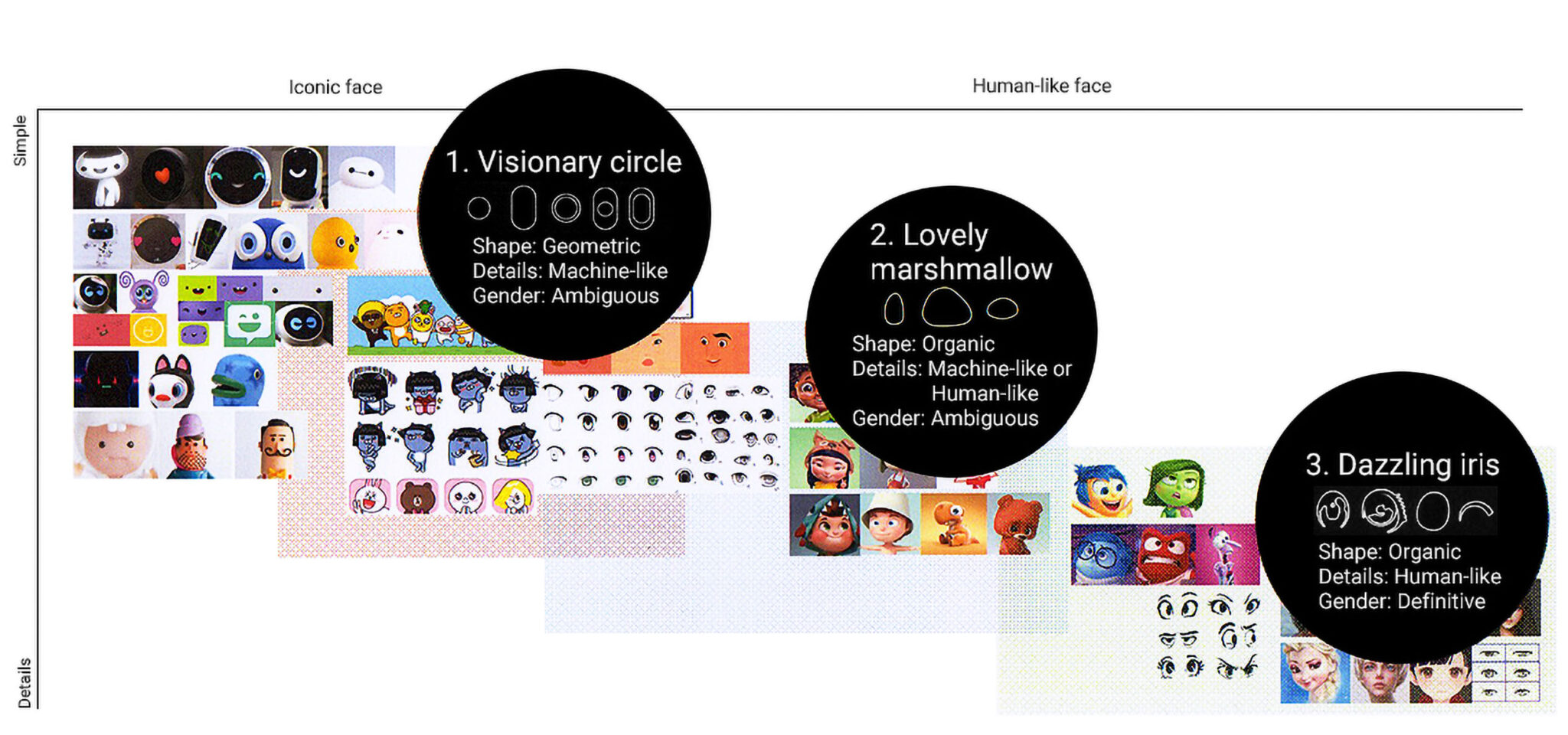
We deliberately positioned Caro in the Iconic + Human-like zone, warm enough to connect, abstract enough to avoid the uncanny valley.

2. DEFINE the emotional
identity of LG's home robot

UX and visual directions

UX

Emotional expressions evolve throughout the relationship, adjusting as the user–robot bond deepens.

Based on the researches building the UX and visual concept. Focused on emotional difference and expressions by the level of how much bonded. Also, how to build the style of eyes, and how to convey emotions to make people interact sincerely with you were dealt with.

Visual

I developed the visual direction with one core idea: Emotion can be delivered through the eyes.

3. Develop

UX and visual directions.
Conducting a user survey and delivering assets.

Design

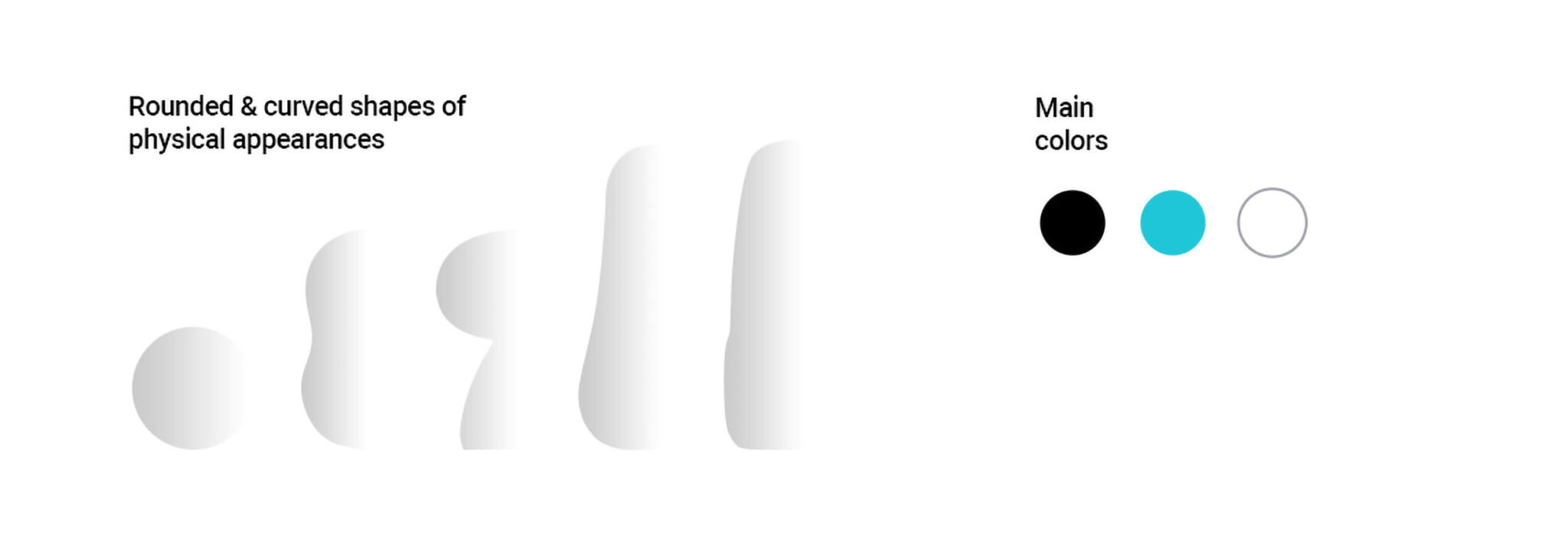
Three visual options were proposed, considering the shapes of physical appearance designs and main colors. 

Prototype and conduct a user survey

After the survey was evaluated of both new designs and the existing one, the final design was selected. Also, the opinions of the board members were reflected.

Online survey of 220 men and women in their 10s to 50s in Korea. This survey was also conducted, presenting the samples of face design with the appearance design to ask which eyes were the most fitting in LG’s lobot appreances.

4. Deliver


Facial expressions for nine situations 

Caro has a set of eye designs that are specific to nine situations and different emotions based on the definition done by researchers. This has become the foundation for all of LG’s robot designs. The nine situations are idle, analyzing, getting praised, sadness, smiling, sleeping, speaking, waking up, and a security mode. The emotions were designed in conjunction with of these different situations.

Normal mode

General idle

Get praised

Surprised wakeup

Happy smile

Sad

Suspicious angry

Analyizing

Sleepy boring

Privacy mode

General idle

Get praised & happy

Listening & Analyizing

Speaking

Sleepy boring

Ready


Design Strategies

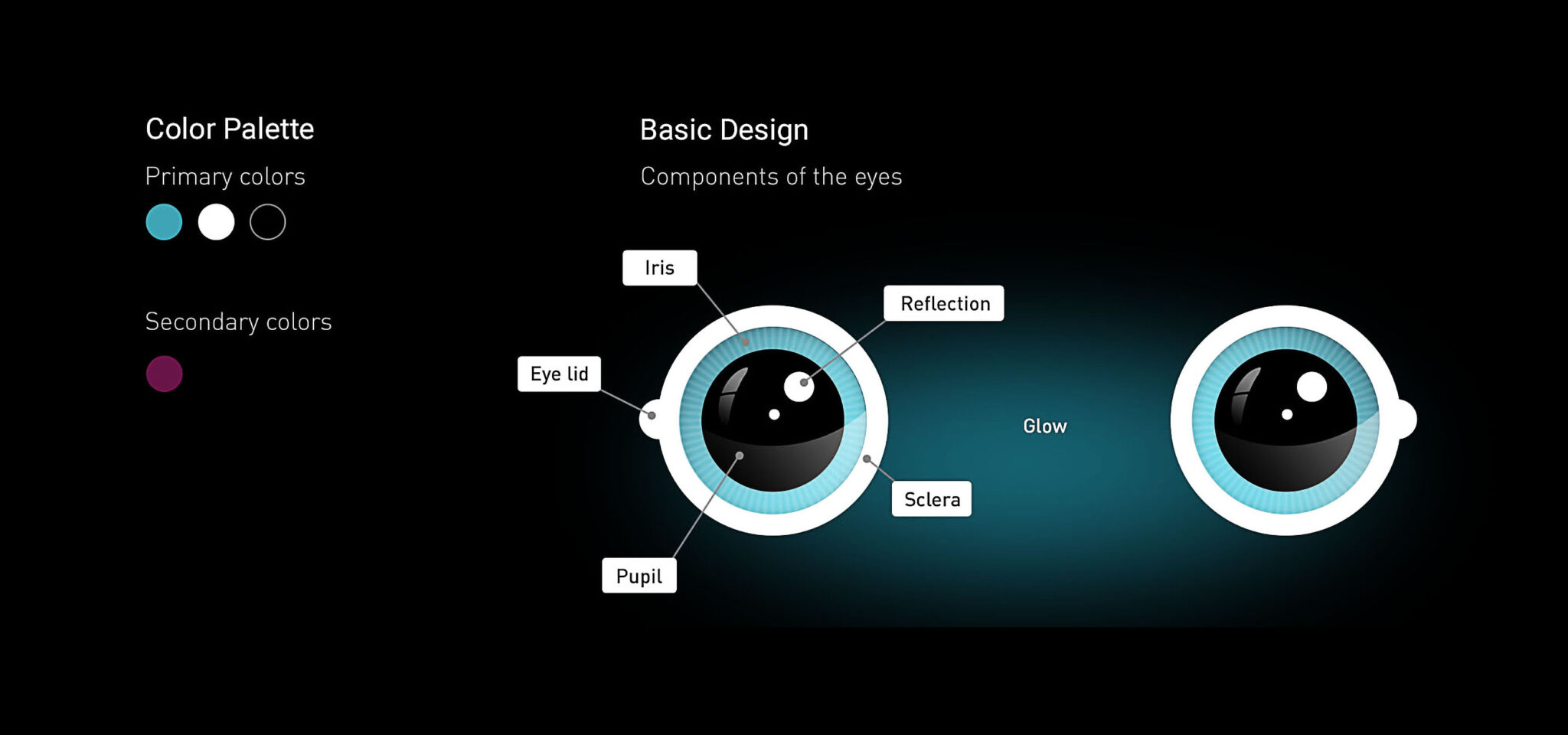
I delivered the fundamental design and four strategies to express emotions.

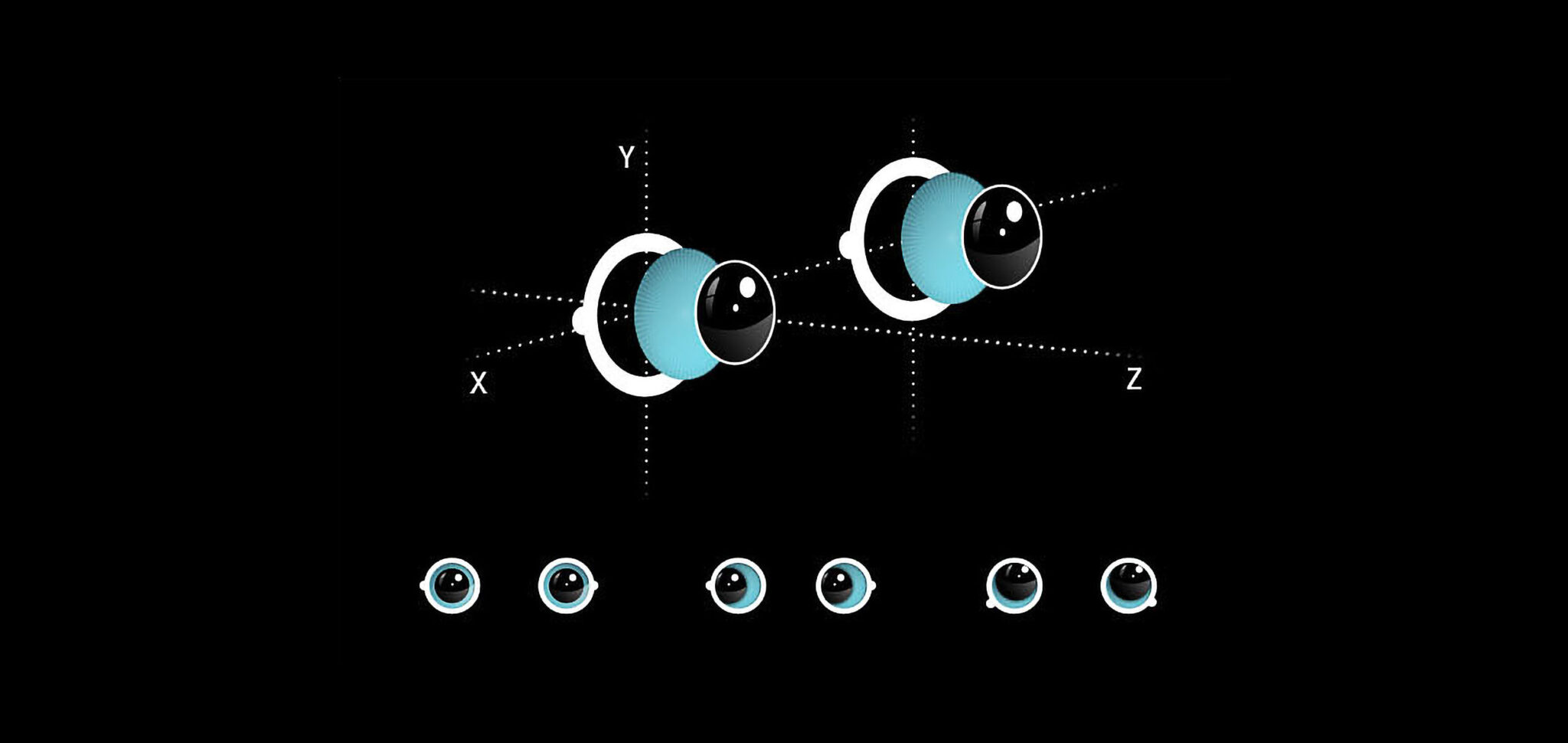
Strategy no.1: Expression of eyes with layers
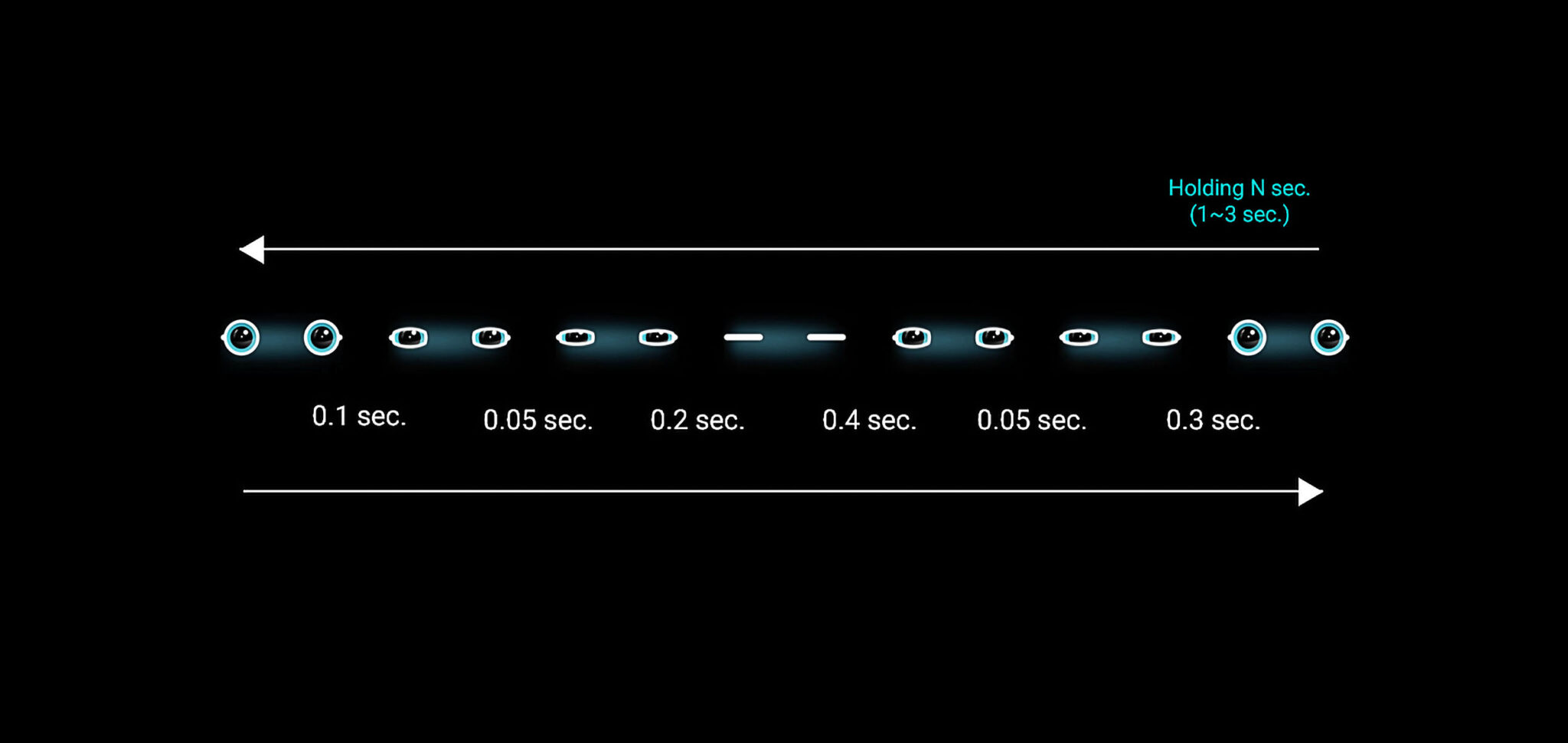
Strategy no.2: Natural blinking
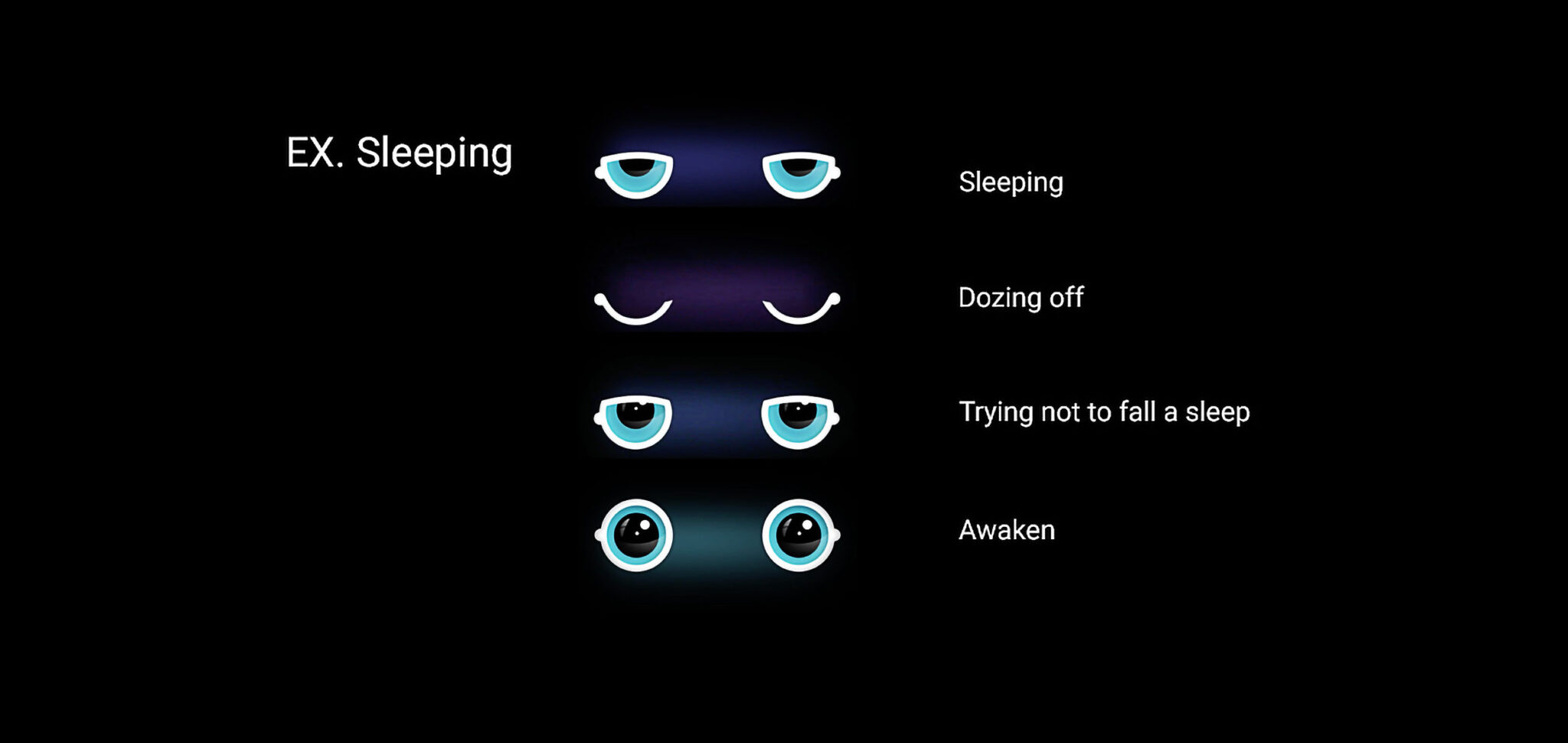
Strategy no.3: change of various facial expressions
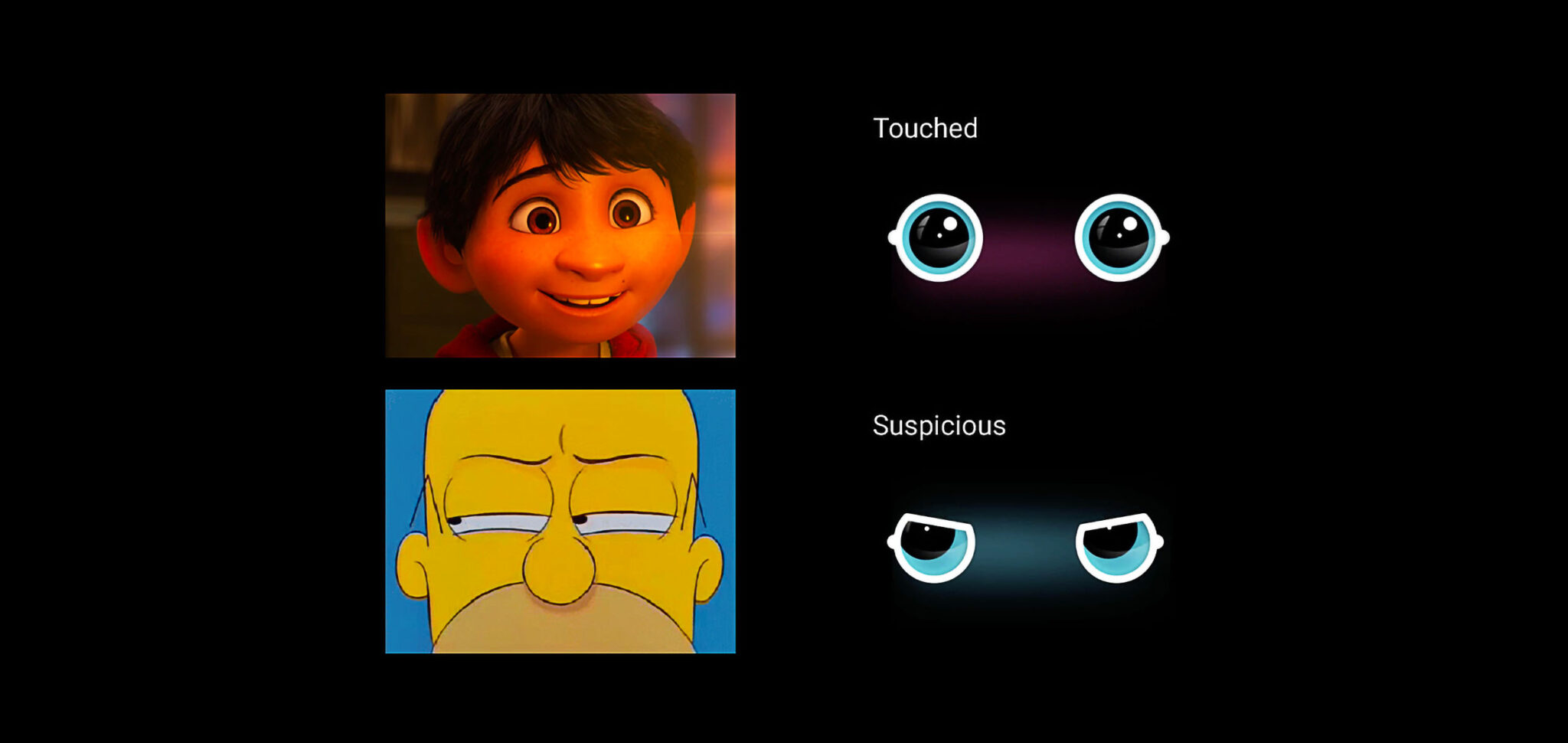
Strategy no.4: Being humorous
Impact

Established a cohesive facial design identity for LG’s robot series under the CLOi brand.

My design became the robot’s eyes and facial interactions of LG Electronics. The design includes the style and definition of kind of emotions.

Public Debut at SXSW (South by Southwest), 2019

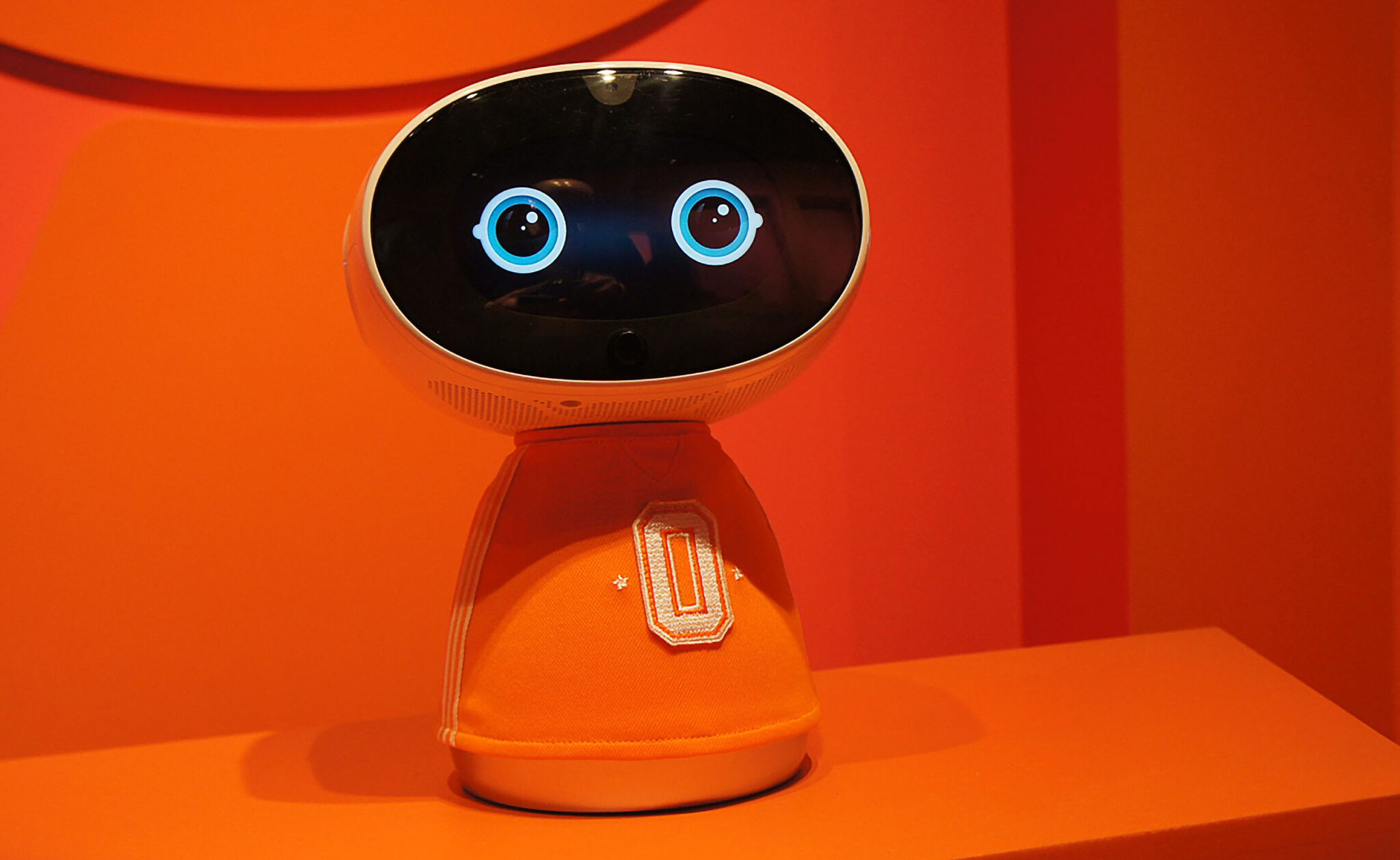
Caro was first introduced to the public at SXSW 2019, where it drew significant attention for its expressive eye design and natural animation. Visitors interacted directly with the robot, and the installation received overwhelmingly positive responses for its emotional engagement and approachable character design.

Design Patent Granted, 2019

The robot’s eye system and accompanying animation earned an official design patent (Application No. 30-2018-0019691). This recognition validated the uniqueness of Caro’s visual language and reinforced the project’s innovation in robotic emotion design.