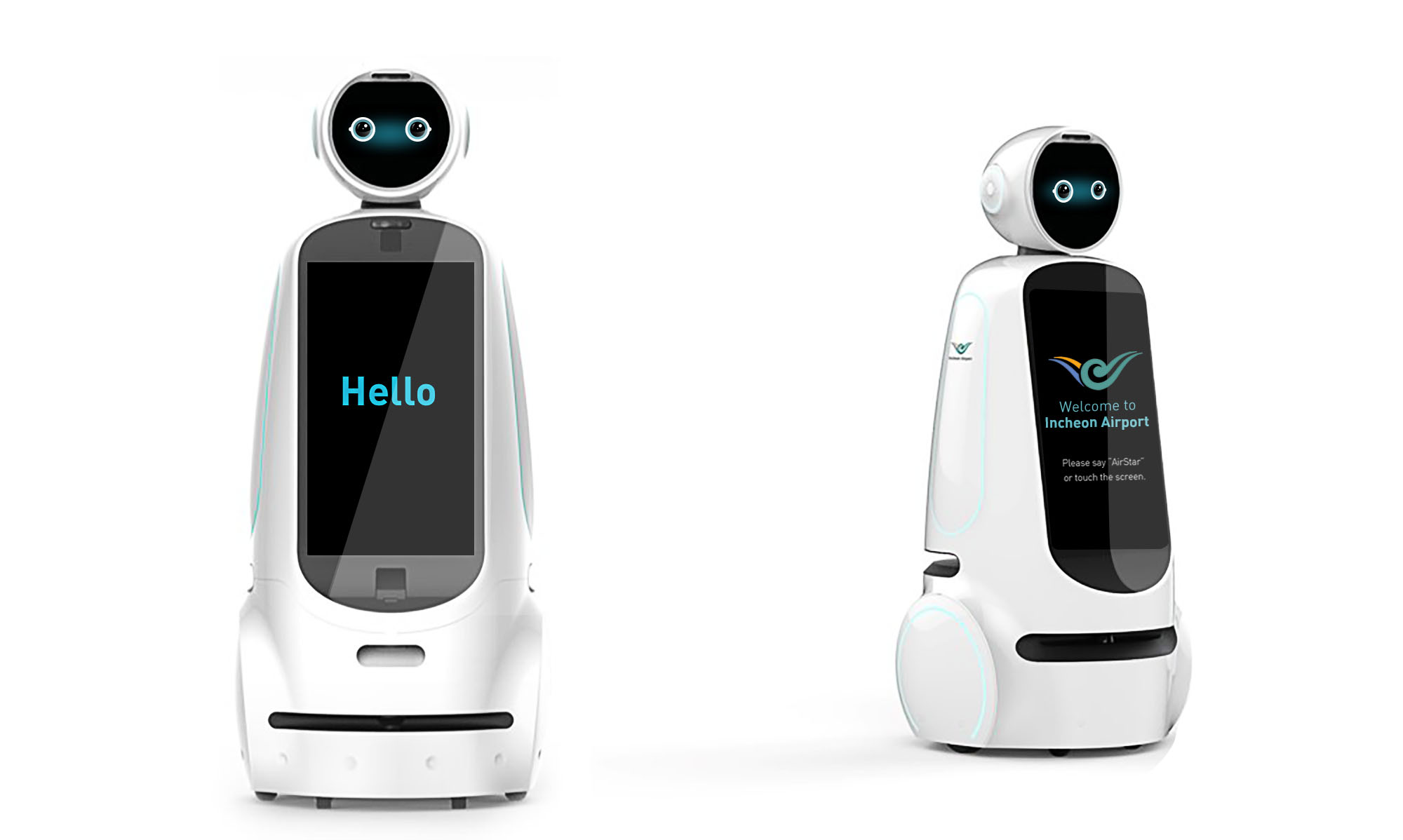
Airstar is a guide robot currently deployed in South Korea’s Incheon International Airport. It is the commercial robot to help guests by providing travel information and various services using advanced technologies such as artificial intelligence, autonomous driving, voice recognition and etc.
2Q 2017 ~2Q 2018
Shipped
Product design
Interactive prototyping
User research & testing
Stakeholder management
Design Lead
My responsibility was to design the UX and UI, along with the interactive behaviors that support the information and services travelers need at the airport. As the lead designer, I collaborated closely with multiple teams, including marketing, research, UX writing, and development.
PM, Engineering, Human Factor, UX writer, Design (1 Senior Designer)
Autonomous airport guide robot for ICN (Incheon International Airport)
AIRSTAR is the name of LG Electronics’ airport guide/service robot deployed at Incheon International Airport (ICN). It’s an autonomous roaming assistant that helps passengers navigate the terminal, typically by taking a flight number, then giving directions (and sometimes escorting people) to check-in counters, gates, baggage claim, shops, etc., using a built-in screen plus voice recognition/AI and multilingual support.
Self-driving / autonomous roaming with obstacle avoidance
Uses touch + voice interaction
Multiple sensors, including LiDAR + camera
Voice recognition
Multilingual language support- Korean, English, Japanese and Chinese
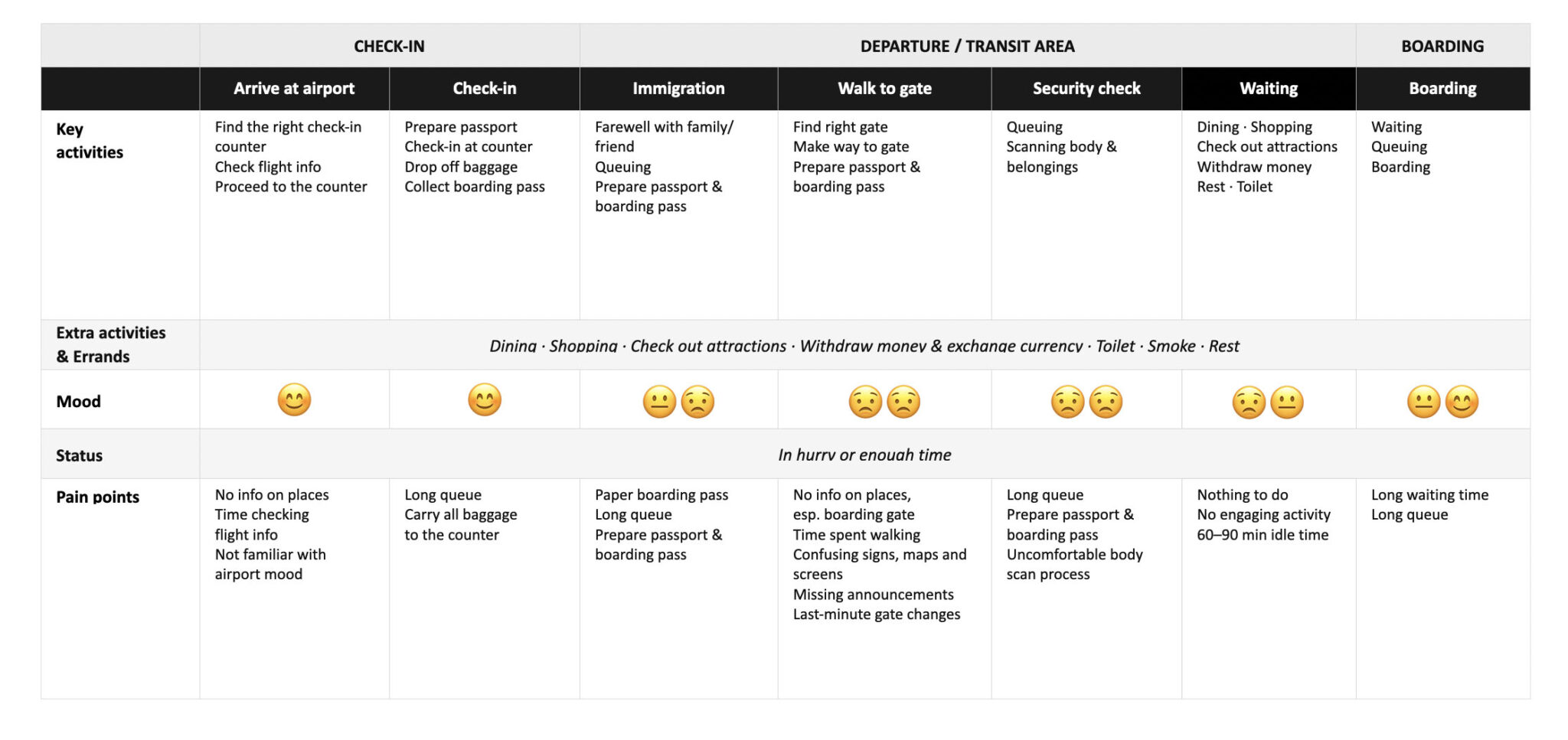
Through the user journey, my team and I could find two main problems to solve.
Most travelers have experienced the stress of rushing to a departure gate. Airports are large, crowded, and easy to get turned around in, so people often need directions and key information immediately. The core challenge was enabling passengers to find what they need in seconds, faster and more conveniently than traditional options like signage or an information desk.
Also you might have had a boring time until your boarding time is around or someone you waiting is just arrived. Definitely, we need something to kill the time sometimes, especially at the airport. What would you do in that case mostly? We would like to give people something fun using this friendly robot to make their journeys more enjoyable.
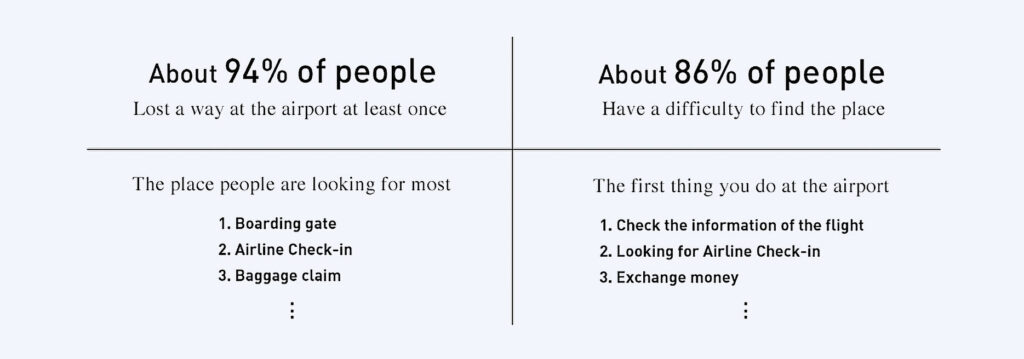
We expected that certain types of information and places would have clear priorities based on what most travelers need at an airport. Through research, we discovered that many people struggle to locate restrooms, departure and arrival gates, restaurants, and other key facilities in large airports. This often leads to uncomfortable moments and unnecessary stress, especially when travelers are short on time and must rely solely on signs to find their way.
We also learned that flight information such as gate numbers, departure and arrival details, and boarding times is the first thing travelers check when they arrive at the airport. Only after confirming this information, they feel a sense of relief and emotional stability.
For the interview, 100 people(Regardless of gender or age) at the airport were questioned for a week.
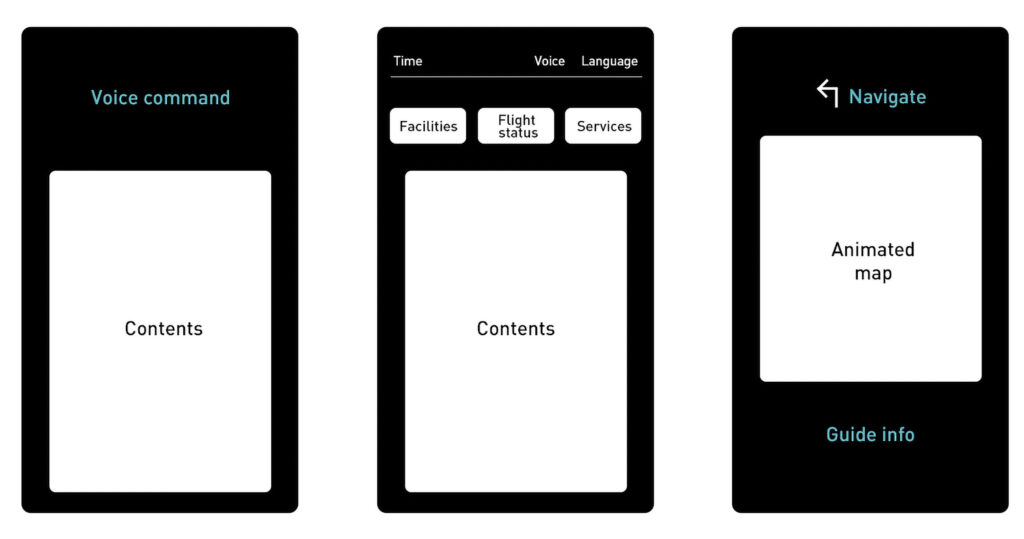
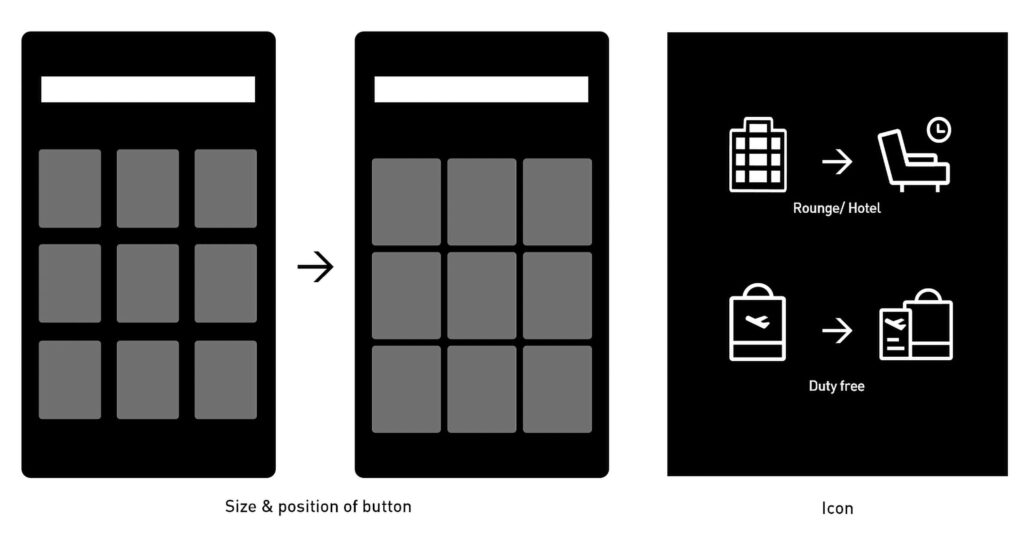
Since we had known the priorities of information category, we had designed several layouts with them as contents of main menu. Then we tried to find which one is the most fast and convenient to the user through running the quick user test. From the result, we decided to go with the below layouts.
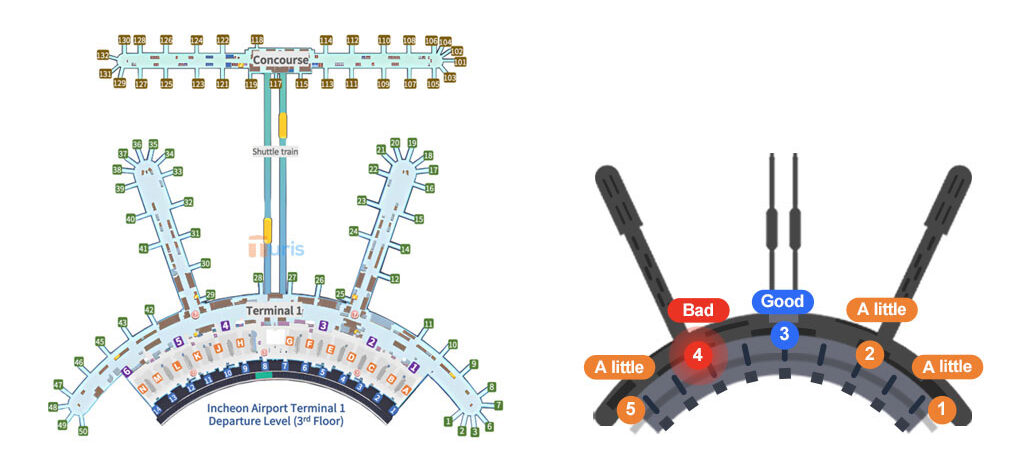
Especially Airport maps contain too much information for real-time navigation. I simplified the experience by extracting only the essentials and translating them into an easy-to-follow route guidance system.
I reduced a complex airport map into a single recommended path, removing non-essential labels so the user can focus on what matters most. Instead of relying on technical map details, I anchored guidance to recognizable landmarks such as gates, the shuttle/train, and the main corridor. I also maintained consistency across the experience by applying the same labeling rules, icon set, and information hierarchy on every screen.
As a result, users could make faster decisions with less back-and-forth and understand directions more clearly at a glance.
We conducted the low-fidelity test through a pilot operation for one month at the airport. After the test, we improved the details of design overall. Especially, buttons became more bigger and texts are written more simple as possible as we could.
One of key parts of this project was my close collaboration with UX writers. We worked together to make every message clear, coherent, and aligned with the UI, which was critical for travelers who need information quickly. Since all text was also provided through voice, clarity mattered even more. This level of collaboration was new to me and became one of the most valuable experiences on the project.
My team and I proposed a new feature that allows the robot to take photos of travelers using its front camera. The idea came when I noticed that my coworkers and I were taking selfies with the robot because it looked cute and approachable. I first suggested a selfie feature with the robot, but due to technical and budget limits it evolved into a photo service that captures travelers and sends their pictures to their email.
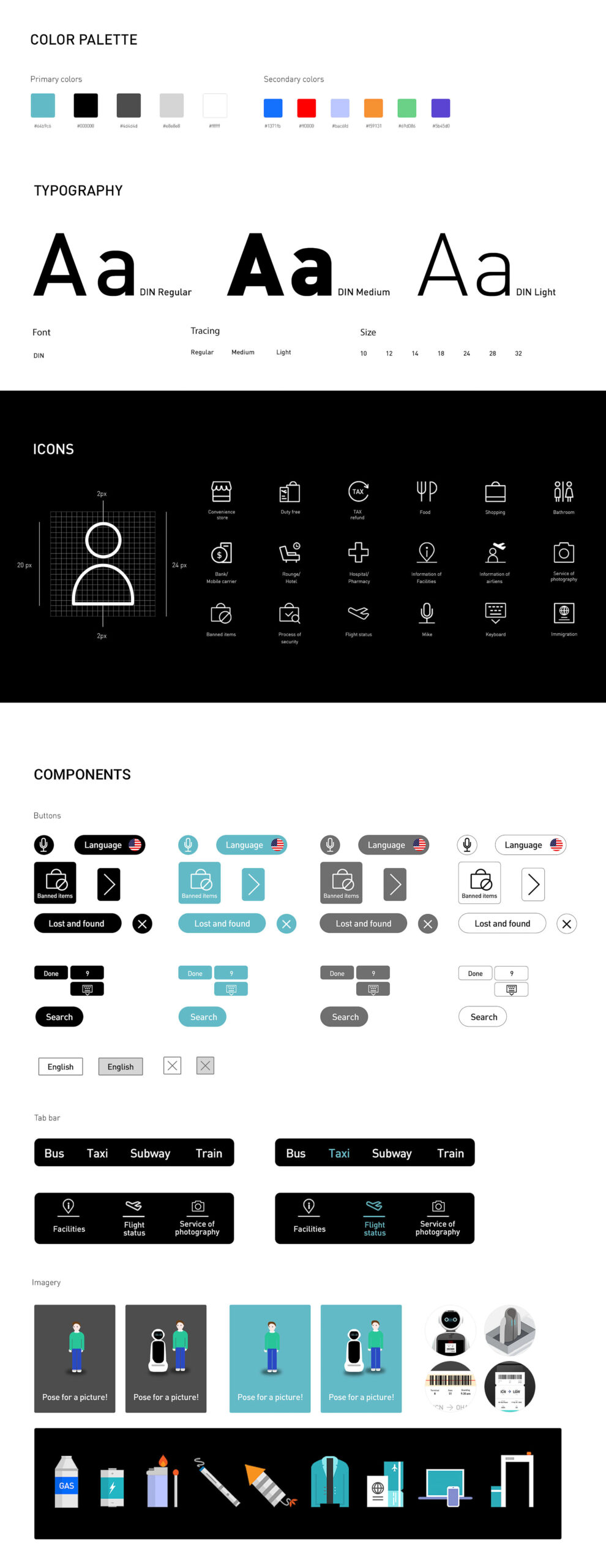
I designed the core design system, including UI components and icons, which were paired with clear and well-prepared text for each screen. In the end, we gathered more than seventy user cases, refined them, and defined the final flows.
The Design system includes the color theme, typography, icons and fundamental UI components.
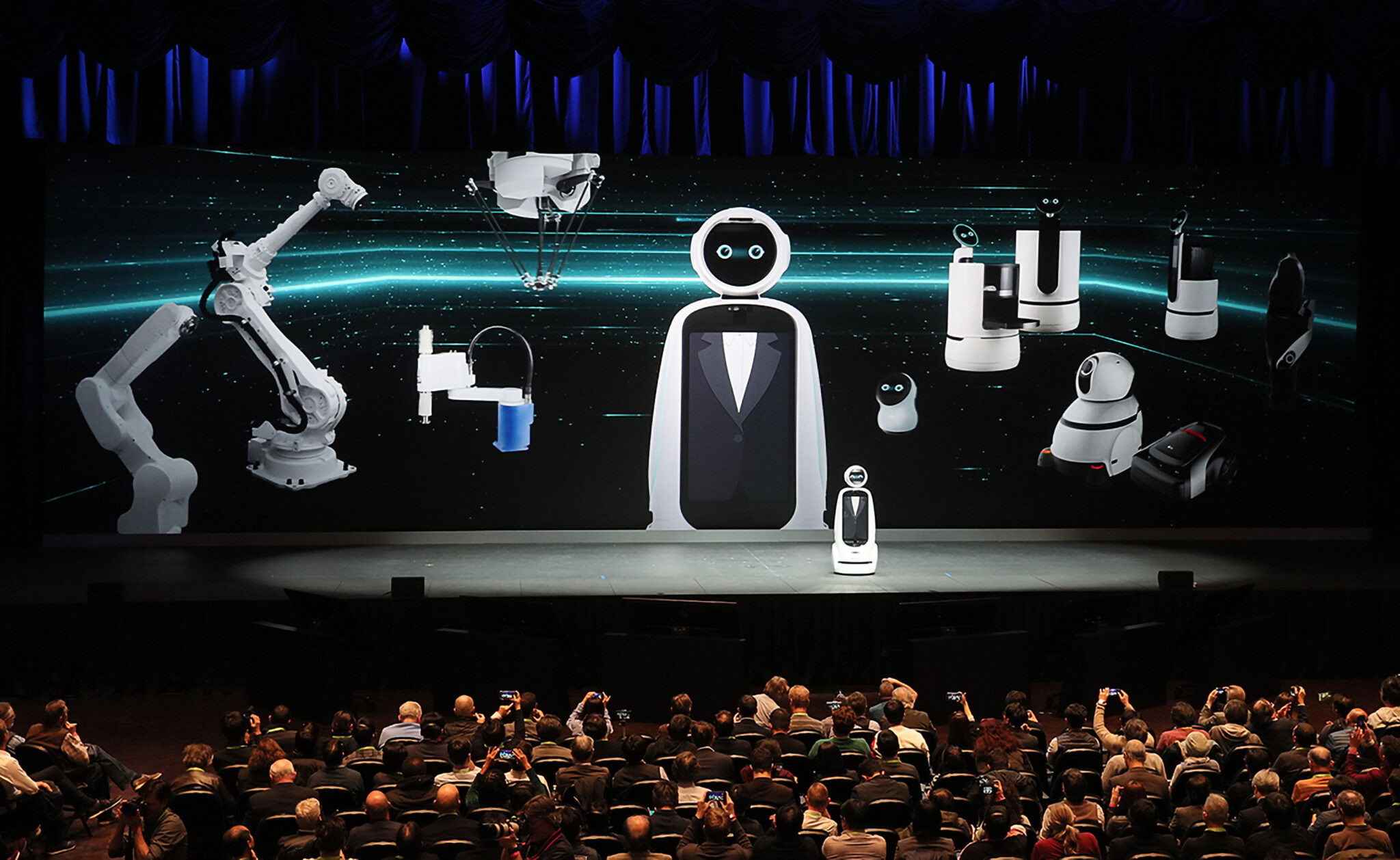
AirStar was revealed to the public during the 2018 Consumer Electronics Show with positive reaction. Also officially It has been started to operate on July 21st, 2018 in South Korea’s Incheon International Airport.
The system demonstrated clear value in three areas based on LG Human Factors internal user testing (2018):
Travelers used Airstar for directions, gate info, and facility guidance, driving +32% more self-service interactions vs. baseline signage/help points and achieving a 62% task-success rate (finding a gate/facility within 3 steps).
By handling common “where is…” and “how do I get to…” questions, Airstar reduced routine inquiries that typically consume frontline staff time. Human Factors testing indicated that this shift helped staff focus more on exceptions and higher-priority support.
Airstar maintained predictable, approachable behavior in busy passenger zones, supporting safe navigation and stable interactions. The Human Factors evaluation validated that the system could operate reliably in real airport traffic conditions without disrupting the flow of people.